

More
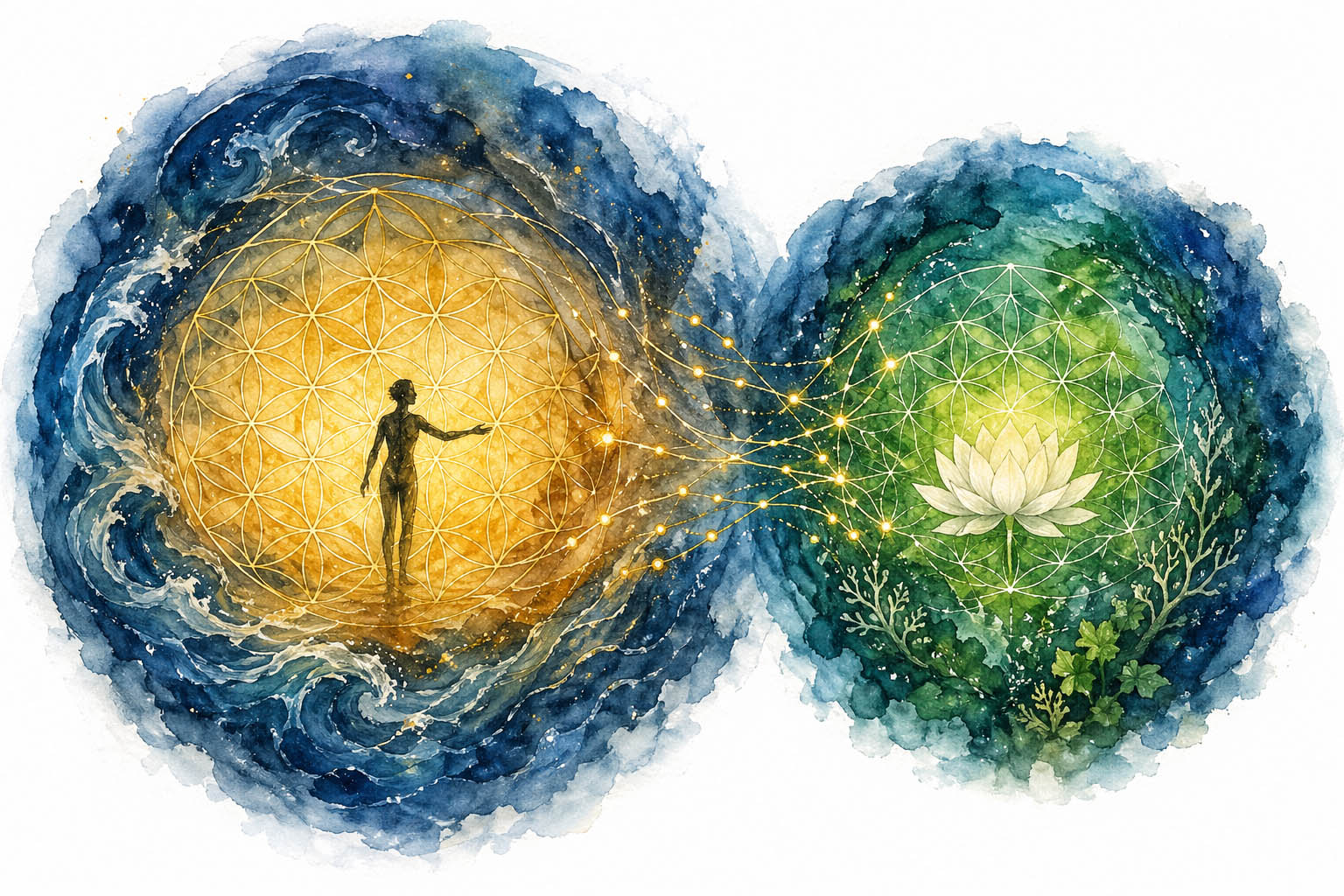
MORE
by Chris Keeney
I want more.
More food. More time. More surf. More happiness. More things. More of whatever it is I just had that felt good for a moment before it stopped feeling good. I want more of that.
I’m not proud of this. But I’m also not sure pride has anything to do with it.
The wanting itself was never a mystery. Look around and you see it everywhere — in the way we shop, the way we eat, the way we scroll, the way we build, the way we consume without pausing to ask why. Consumerism is the water we swim in. More is the current beneath it. I’ve always known this, observed it, felt it in myself. But knowing something and understanding it are different things entirely. For a long time I understood the what without ever understanding the why. Where does it actually come from, this hunger that never quite fills?
Then I read The Molecule of More by Daniel Lieberman, and something clicked. Not gently. More like a light coming on in a room you’ve been navigating in the dark for years. Because what Lieberman revealed isn’t a character flaw or a moral failing. It’s biology. It’s the dopamine system — ancient, hardwired, and doing exactly what it was designed to do.
And it’s doing it in me. Every day. Without asking permission.
~ ~ ~
Here is what most people get wrong about dopamine: it is not the pleasure molecule. It is the wanting molecule. The anticipation molecule. The always-reaching, never-arriving molecule. When you finally get the thing you wanted — the promotion, the trip, the gear, the house — dopamine doesn’t reward you with satisfaction. It drops. And then it pivots, almost immediately, to the next thing. The having is always a little flat compared to the wanting. The dream is always richer than the reality.
Lieberman describes it this way: our brains are essentially operating in two worlds simultaneously. There is the far space — everything we don’t yet have, everything we’re reaching toward, the future and all its promise. Dopamine owns that territory. And then there is the near space — everything we can actually touch and feel and experience right now, in this moment. That world belongs to a different set of chemicals entirely. Serotonin. Oxytocin. Endorphins. The molecules not of wanting but of being. Of presence. Of enough.
The trouble is that dopamine is loud. It is persuasive. It has two circuits running at once — one that creates the itch to want something new, and another that calculates exactly how to get it. Together they are relentless. And they are very good at convincing you that the far space is where the good stuff lives. That the next thing, the better thing, the more of everything — that’s where happiness is waiting.
Freud understood this, in his way. The pleasure we get from wanting something is almost always greater than the pleasure of having it. The imagination fills in everything the reality cannot deliver. And so we keep wanting. Not because we are weak or shallow or ungrateful. Because the system was never designed to arrive. It was designed to keep moving.
This is the root of something. Not just personal restlessness or consumer behavior or the nagging feeling that your life should be slightly better than it currently is. Something deeper. Something that runs beneath all of it like a hidden current, shaping everything above it without ever announcing itself.
When you understand that root, you start to see it everywhere.
~ ~ ~
When is enough, enough?
It’s not a judgment. It’s a question that, once it arrives, you can’t quite put back. Because the same current runs in all of us, at different scales. The packages that start arriving at the door when you’re assembling something new. The specific pleasure of the wanting, the ordering, the anticipating — sometimes more vivid than the thing itself once it’s in your hands. The way the mind is already moving toward what’s next before the last thing has even arrived.
Scale that up and the pattern doesn’t disappear — it compounds. What is true in a single life becomes true in a culture. A civilization that cannot ask when enough is enough will keep taking from the natural world the way the wanting mind keeps taking from the credit card — always sure the next thing will finally satisfy, always slightly surprised when it doesn’t. Industrial fishing fleets taking more than the ocean can give. Carbon pumped into the atmosphere because growth must continue, always continue, because the molecule demands it.
This is not a condemnation of wanting. Dopamine is also why we built cathedrals, painted on cave walls, composed symphonies, went to the moon. You cannot separate the beautiful from the destructive in this. They run on the same fuel.
But unchecked — unexamined — the dog chasing its tail doesn’t know it’s a dog. That’s the part that costs us.
~ ~ ~
And yet.
There are moments — I think everyone has them, though we don’t talk about them enough — when the spell breaks. Not because you got the thing. But because something pulled your attention so completely into the present that the wanting simply stopped. You’ve crossed from the far space into the near one. The fog lifts. The horizon appears. The anxiety that hums beneath ordinary life goes quiet, and for a moment there is something close to inner peace. A clarity so clean it almost startles you. Like that first cup of coffee in the morning when you’re just waking up — the moment it hits and you think, ah. There it is. I can see.
We sober up. Briefly. And in that sobriety, enough feels not like a consolation but like the truth.
~ ~ ~
So if dopamine is always pulling us toward the next thing, always whispering about the far space, always promising that more is where the good stuff lives — how do we find our way back? How do we actually catch the moments that matter before they pass us by unnoticed?
I think it starts with learning to recognize when life is saying yes.
Matthew McConaughey wrote something in his book Green Lights that stayed with me. He described happiness not as a destination but as an approach — like a plane coming in for a landing. It’s not about the touchdown. It’s everything that leads up to it. The arc. The descent. The long, deliberate approach toward something you can see but haven’t yet reached.
In the water, I know exactly what he means. It’s not just the barrel that matters — it’s everything that leads to it. The paddle out in the dark. The reading of the horizon. The positioning, the waiting, the feeling of a swell building beneath you before it has decided what it will become. The approach is where the aliveness lives. Dopamine, it turns out, already knew this. The anticipation was always the point.
But here is what I’ve learned from the rare moments when the wave actually delivers — when you find yourself inside it, fully enclosed, the world reduced to water and light and the particular roar of something perfect happening around you — you have to let it land. You have to be there for it. Receive it. Feel the stoke move through you and carry it back out with you when it’s over, like a coal you keep warm in your chest. Because that moment is the proof. Proof that the effort is worth it. That life gives gifts. That gratitude is not a practice you have to manufacture — it arrives on its own when you are present enough to catch it.
The barrel is real. The gift is real. Remember that.
~ ~ ~
And then the wave ends.
And you turn around. And you paddle back out.
Not because the barrel wasn’t enough. It was. It absolutely was. You carry the stoke with you — that warm coal in your chest that says life is good, that moments like that exist, that the effort is worth it. You know this. You felt it. It was real.
And yet. You wait around for another one. And you catch it. And it’s not the same. It’s different in ways you can’t quite name — a little shorter, a little less perfectly formed, the light not quite right. You are already doing the comparison before the wave has even finished. And now you’re vaguely disappointed. And possibly late for work.
This is not ingratitude. This is the molecule doing what it always does — taking the near space experience you just had and immediately converting it into far space currency. The memory of the perfect wave becomes the baseline. The imagination improves on it. And the next wave, the real one, the one made of actual water on an actual morning, cannot compete with the one dopamine has been quietly perfecting in your mind.
It happens with places too. You travel somewhere with the person you love and it’s wonderful — genuinely, completely wonderful. The food, the light, the feeling of being somewhere new together. Years pass and the memory glows. So you go back. And it’s good. Of course it’s good. But it’s never quite the same as the first time. Something is missing that you can’t locate. The magic feels slightly out of reach, like a word on the tip of your tongue.
The ancient Greek philosopher Heraclitus understood this long before neuroscience had a name for it. No man ever steps in the same river twice, he said — for it’s not the same river, and he’s not the same man. The water has moved on. And so have you. Every moment is unrepeatable. Every wave, every trip, every morning on the water exists once and then becomes memory — and memory, beautiful and treacherous, is not the same thing as being there.
The question was never whether we would want more. We will. We always will. The wanting is the root of everything — the destruction and the beauty both, the cathedral and the strip mine, the symphony and the supertrawler. It is what we are.
The question is whether we are awake inside it. Whether we can feel the moment when it’s happening. Whether we can let it land. Whether we can carry it forward without immediately turning it into something to chase again.
You can’t step into the same river twice. But you can step in. You can feel the current. You can be there, fully, for what’s actually happening — not the version you remember, not the one you’re already imagining. This one.
Yet here we are again, wanting more from life.
But here is a question worth sitting with. What if we aimed the wanting differently?
The same molecule that drives a person to buy something they don’t need also drives a civilization to clear a rainforest to make way for something it doesn’t need either. The same restless reaching that fills our homes with things fills the ocean with plastic, wraps fishing line around sea turtles, blankets coral reefs in the warm dead water of a planet running too hot. The wanting that never arrives keeps taking long after there is nothing left to take.
We know this. And still we want.
But sometimes — just sometimes — in the space between one wave and the next, something shifts. A glimpse. Another world, not so different from this one. Just a touch of green at its edges. Coral that is actually alive, color moving through it like light through stained glass. A river in the Amazon that hasn’t been silenced yet, full of sound and creature and the particular green of a canopy that has never been cut. A sea turtle moving through clean water, unhurried, trailing nothing behind her. A tree breathing freely, its leaves clean, its roots deep in soil that hasn’t been poisoned.
You can’t hold the glimpse. It passes the way all near space moments pass. But it leaves something behind.
What if we wanted more of that? Not more things. More life. More coral. More forest. More clean water. More peace between people who have forgotten they are made of the same restless molecule, reaching toward the same light. More empathy for the living world we are consuming in our sleep.
The wanting doesn’t have to disappear. It just has to wake up.
The lotus doesn’t bloom in spite of the depths. It blooms because of them. It reaches through the dark water toward the surface not because it is greedy but because that is what living things do. They reach toward light. They grow toward what they cannot yet see.
Maybe that is what the best of our wanting is — not the molecule of more, but the molecule of becoming. Not consumption but growth. Not taking but tending.
Yet here we are again, wanting more from life.
Not because it isn’t enough —
but because we weren’t there when it was.
And because somewhere just beyond what we can see, there is a world with a touch of green in it that we haven’t grown yet.
Green isn’t just a color. It’s a condition. It’s what the planet looks like when it’s happy. When the coral is alive and the water is clean and the forest is still breathing and the creatures in it aren’t tangled in what we threw away. Green is what the world looks like when it’s flourishing — when we’ve wanted the right things, and left enough room for life to be what it actually is.
__________________
You also may enjoy reading:
Below the Surface: A New State of Consciousness
How witnessing ecological collapse firsthand changes consciousness and reveals the consequences of human systems on the natural world.
Lost Civility
An examination of the loss of civility in everyday life—and the thought patterns and behaviors driving it
Presence, Pattern Recognition, and the New State of Consciousness
A look into how declining attention is eroding our ability to recognize patterns, and how presence restores it.
Enduring Optimism: Resilience as a Way Of Life
The Mirror
A Reflection on Artificial Intelligence, Human Consciousness, and the World We Are Making
What We Carry Forward
The architecture of the soul: Sowing patterns that serve the whole
No Comments